We are a culturally diverse group of researchers and community members who hold intercultural dialogues related to social (in)justice, especially in the realm of empowering minorities and racialized people whose communities and lives face social obstacles to representation. We defend the power of cultural expression and the power of movement as an agent of social change. We bring groups together and empower different cultures.
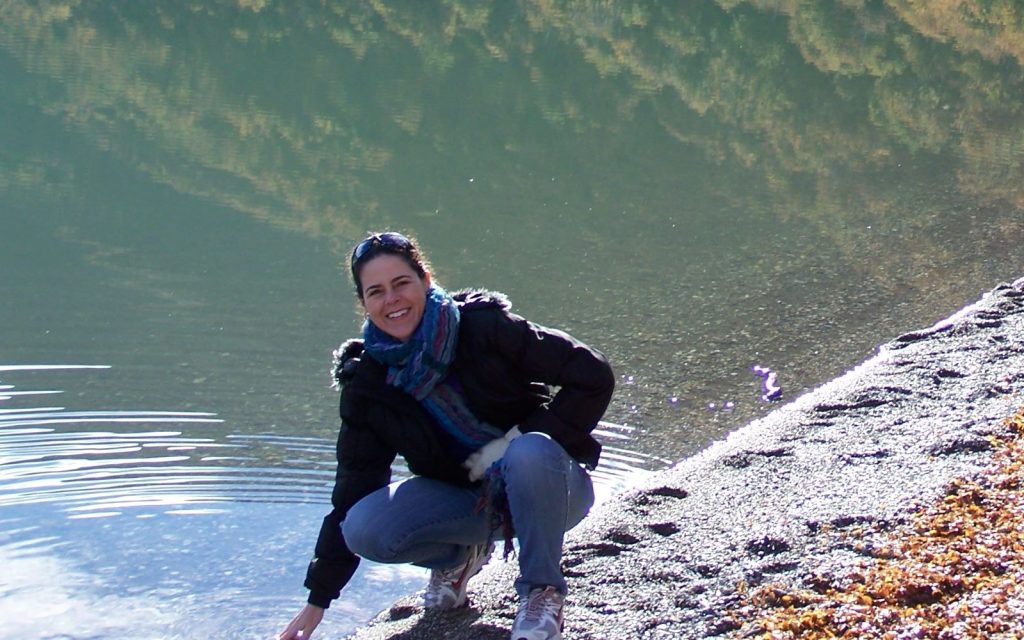
Research Team Leader: Dr. Déborah Maia de Lima
Déborah is the principal investigator and coordinator of the Pole-to-Pole project. She has a postdoctoral fellowship at the Department of Integrated Studies in Education at McGill University (Canada). She has a PhD in Études et pratiques des arts at the Université du Québec à Montréal (Canada), in Performing Arts at the Universidade Federal da Bahia (Brazil), and a Master’s in Clinical Psychology and Culture at the Universidade de Brasília (Brazil). She is also a member of the Global Directory Who’s Who in Dance (Conseil International de la Danse – UNESCO). Her practice includes multidisciplinary approaches to Indigenous studies, art education, art therapy, dance, social justice, Somatic education practices, and creativity/innovation in formal and informal educational systems globally. Currently, Déborah’s work focuses on the intergenerational aspects of the relationship between dance/corporeality/land and art-based visual methods as tools to contribute to the Indigenous leadership’s framework for social change.
“My land has palm trees, where the thrush sings,” says the poet’s poem. The land, the water and the sun nourish my spirit, fill my heart with joy, comfort my soul. The sun is father, the water road, the wind… prayer. The land is the generous mother that sets us up on this planet, that gives us food to eat, fills our senses with poetry, fills our heart with joy. The land is beyond words, it is simply everything.”
Research Team Leader: Dr. Claudia Mitchell
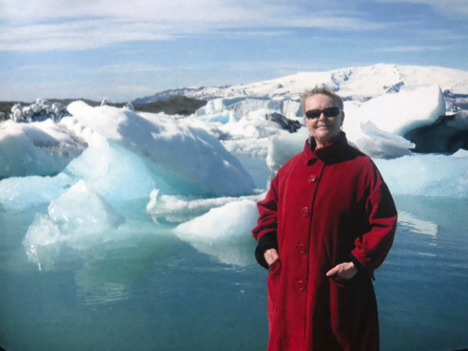
Claudia is the co-researcher of the Pole-to-Pole project. She is a Distinguished James McGill Professor in the Faculty of Education at McGill University, an Honorary Professor at the University of KwaZulu-Natal in South Africa, and a Fellow of the Royal Society of Canada. Claudia is also the Director of the Institute for Human Development and Well-being and the Founder/Director of the Participatory Cultures Lab. Her research focuses on using participatory visual methods to address critical social issues such as gender-based violence and gender-transformation. She is the founder and Editor-in-Chief for the award-winning journal, Girlhood Studies: An Interdisciplinary Journal. Claudia has authored and co-edited 32 books.
“I am standing on an ice mass in this photo taken a few years ago when I was visiting Iceland. I am, of course, no newcomer to ice and snow. I grew up in Manitoba in western Canada where snow can start in October and we can often expect a spring storm as late as May.”
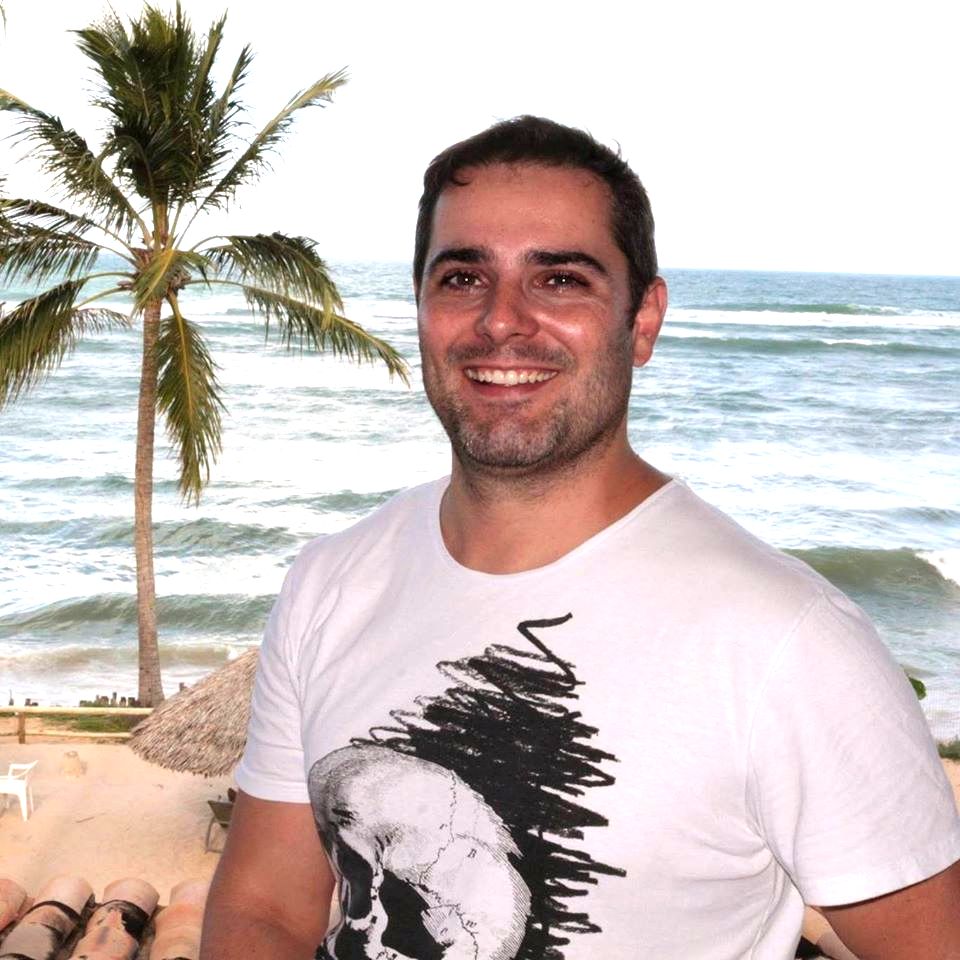
Onsite Coordinator: Dr. Diego Pizarro – Brazil
Diego has been a dance artist, researcher, and professor at the Federal Institute of Brasilia since 2010, where he coordinates the Collective of Studies in Dance, Somatics and Improvisation (CEDA-SI). He holds a PhD in Performing Arts (UFBA), a Master’s degree in Contemporary Art and a Bachelor’s degree in Performing Arts (UnB). He has a postdoctoral degree from the University of Brasília, and is a Certified Teacher of Body-Mind Centering® and Articulation and Muscle Chains GDS practitioner. Since October 2022, he has been a permanent professor at the Graduate Program in Performing Arts at Federal University of Bahia. Diego Pizarro collaborates with Pole-to-Pole as the coordinator of the center site of Brazil in Brasília.
“My relationship to the land has been a very multiple and shifting experience. Since Brazil is a continental country, and my parents were always seeking new professional perspectives, I have lived in different areas with diverse geographies, climate, and vegetation. These have included the southeast, middle east and northeast. I was also raised in the countryside where I developed a very intimate relationship with the land. I understand that this may be the reason for which I have struggled to deal with so many geographical and cultural changes since my teenage years. I didn’t have time to develop a strong bond with every place I moved to. This may have been the reason why I had felt such a strong sense of absence while living abroad (Europe and the U.S.) for three years. The sense of belonging and the need to integrate this into my own life through corporeity, Somatics and dance have been a continuous quest when returning to the very notion of land and its embodiment practices.”
Onsite Coordinator: Dr. Édson Kayapó – Brazil
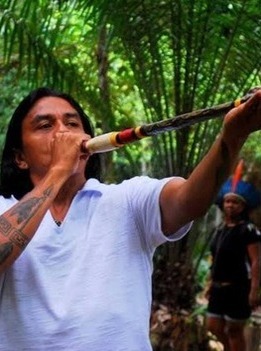
Édson Kayapó is a professor in the Intercultural Indigenous degree program at the Instituto Federal de Educação, Ciência e Tecnologia da Bahia. He is a member of the Mebengokré nation in Brazil and of the Indigenous parliament for the country. Édson is an Indigenous activist for the Indigenous and environmental movements in Brazil, a writer, and a historian with expertise on the Brazilian Amazon. He holds a doctorate from the Pontifícia Universidade Católica of São Paulo and is the coordinator of the Southern Bahia site, in Porto Seguro, in Brazil.
“I learned from the elders, shamans, and Indigenous leaders that the original land is the cosmogonic space of production and reproduction of life in all dimensions. They are gardens that we inherit from our ancestors and that we must take care of for ourselves and for humanity. I have traveled through Indigenous territories in Brazil, stepping with respect, learning and teaching how to create social projects in harmony with human and non-human life. The dances, songs, and other rituals are elements of ethnic identity affirmation and of paying respect for the land and everything in it.”
Onsite Coordinator: Rosana Edith Bernharstu – Argentina
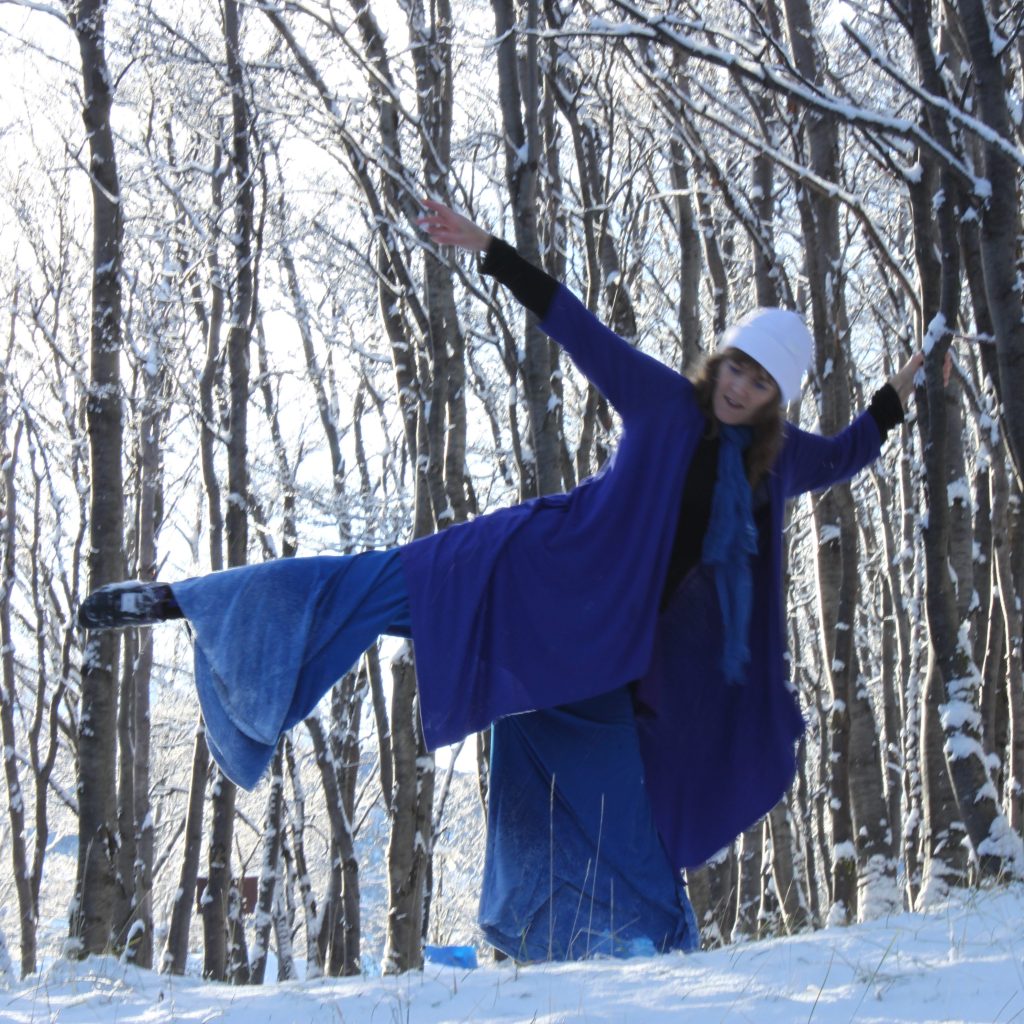
Rosana is a bodily educator and a dancer of the forests, with years of experience dancing in nature. She is also a physical education teacher working in preschools. Rosana is a Danzaterapeuta certified by Maria Fux, in Argentina. She is a leader in Soul Motion and creator of her own style of dance called Naturaldanza, a style inspired by the free dance of Isadora Duncan, with roots in the Danzaterapia approach – Maria Fux method. Her classes are surrounded by nature and in the woods, lakes and waterfalls. She published her first book “Danza sobre la Tierra” in 2010. Rosana is the Pole-to-Pole on-site coordinator in Ushuaia, Tierra del Fuego, Argentina.
“Nature has always been my guide, with my bare feet on the earth, my body as part of the forest, my arms as branches moved by the air, and my fingers as falling leaves in the Autumn, and as snowflakes in the Winter. I am nature. We are nature.”
Onsite Coordinator: Hue Teopixke Carlos Hernandez Parra – Mexico
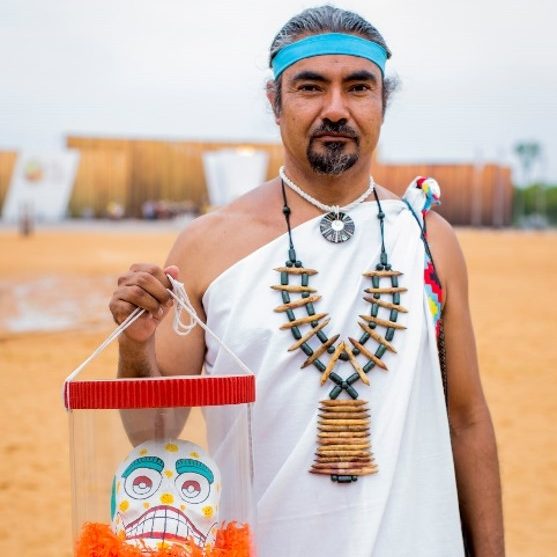
For 30 years, Ehekatl has been immersed in the experiential study with teachers of the Nahua culture and cosmovision in an oral or traditional way through dance, philosophy, calendars, reading of codices and games of Indigenous and traditional origin. In the last 25 years, he has been sharing the importance of ancestral cultures. He has been responsible for the ancestral ceremony of the Mexican New Year in Jalisco for 24 years. Ehekatl Tozkayamanki is the on-site coordinator in the region of Guadalajara and Túxpam (Mexico).
“I consider Mother Earth as a great dual being of feminine essence with whom we have a deep and sacred bond that deserves all our care and respect; she is the one who provides all beings, day by day, with everything necessary to lead a balanced and harmonious way of life, including other creatures with hair, feathers, branches, scales, minerals, as well as the entire human species and sublime beings. Parallel to the process of revitalization of the ancestral legacy that colonialism in different ways has sought to eradicate for hundreds of years from our continent, I am immersed in a continuous and deep process of cultural and spiritual decolonization.”
Research Assistant: Boroka Zita Godley – Scotland
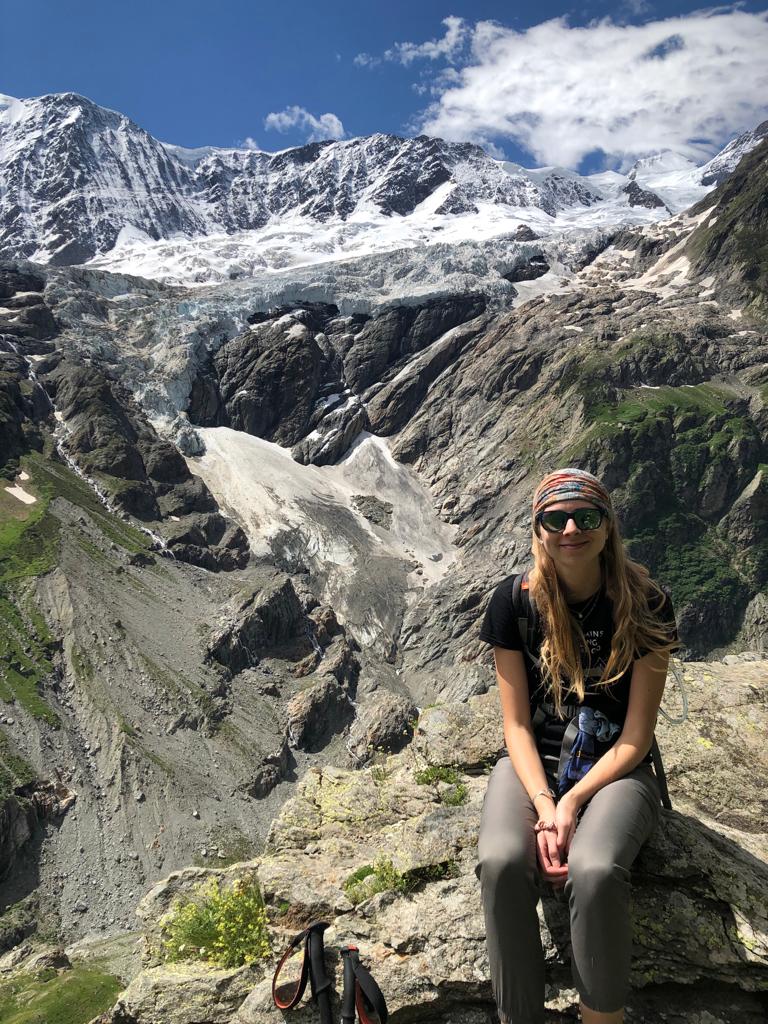
Boroka is Scottish and Hungarian, and a PhD candidate at McGill University. Her doctoral research focuses on exploring the relationship between child marriage and education in the North and Northeast of Brazil. She shall use participatory methods to explore adolescent girls’ lived experiences of child marriage, including their possibilities and limitations within this realm.
“Growing up in Scotland, I have always understood the power of land and the importance of respecting it. I spent my childhood and adolescence in nature on hiking and camping trips. We would walk for days and days without seeing a single soul or any sign of civilisation. It was through these these trips, and this innate connection with nature and the land, that I grew up. Land allows us to think, reflect and feel. It facilitates the types of conversations that allow us to discover who we are, and who we want to be. It gives us the space and energy to know and understand ourselves and to make big decisions. It helps us to heal. And it is through the land that some of my best memories and closest friendships have been forged.”
Research Assistant: Tina Saleh – Canada
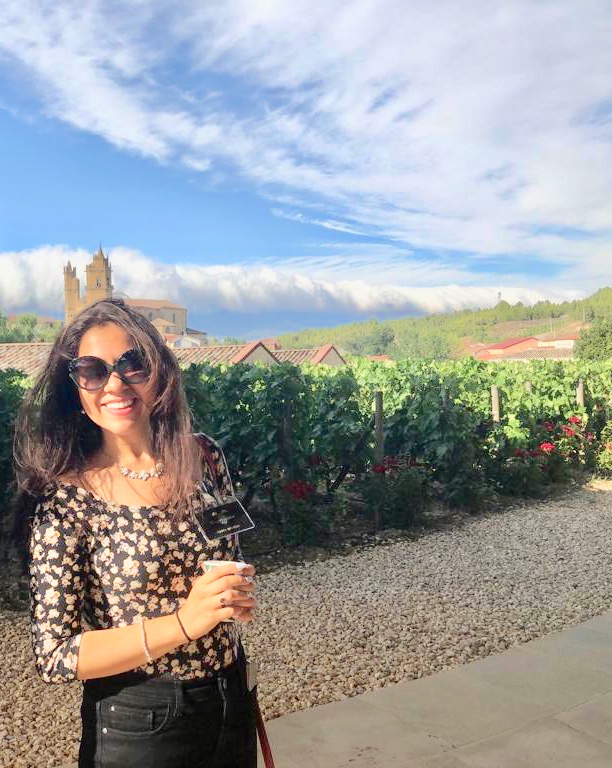
Tina’s doctoral research is in collaboration Colombian NGO FUNDAEC, which develops technical and vocational education training (TVET) programs to support Colombian youth from rural areas. She uses participatory methodologies to capture the nuances of Colombian youth as producers of critical insights into the socio-economic reality of post-conflict Colombia.
“Land is where we feel community, connected with those around us, seeing them as family, without any divisions. I think that country names are merely political barriers that human beings have created. Human beings are resilient and adaptable to new surroundings. Like plants, we can leave one land on which we were cultivated, and, if the community welcomes it, be re-planted, integrate, and flourish on another. The statement ‘the earth is but one country and mankind its citizens’ has always inspired me.’ As a product of parents who were displaced from their home lands, I have come to identify with a multitude of cultural communities who have welcomed me with a wide embrace.”
 DANCING WITH THE LAND